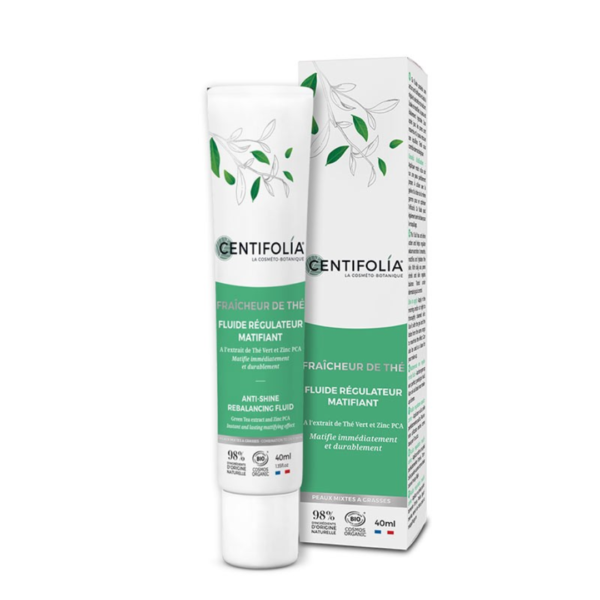





































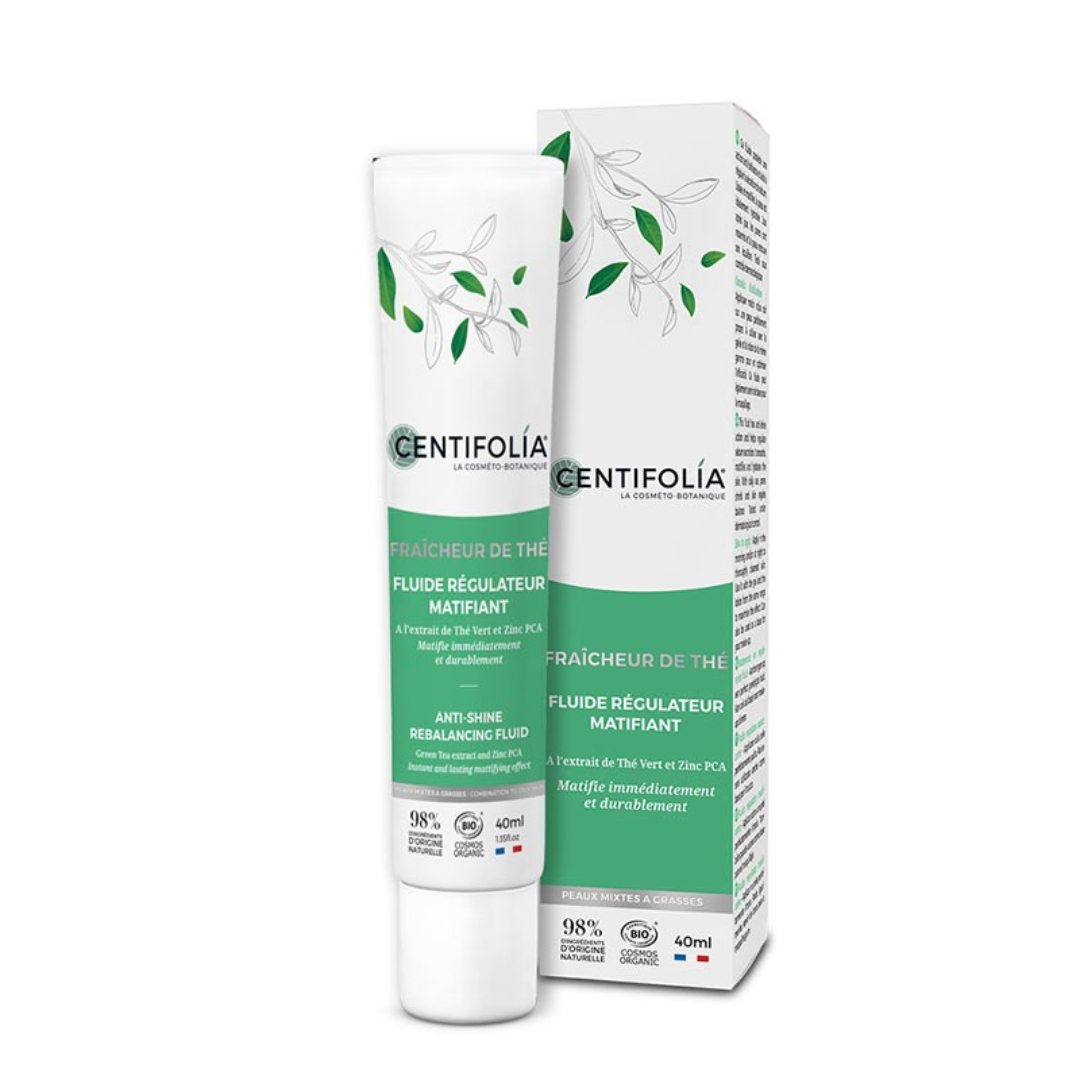
Centifolia Fluide Regulateur Matifiant 40ml
Pour une peau hydratée et matifiée
Une combinaison d’actifs purifiants et matifiants
Action antibrillance
Régule la sécrétion de sébum
Lisse, matifie et hydrate la peau
Resserre les pores
145.00 DHS
6 en stock
16
People watching this product now!
Description
Pour sa gamme Fraîcheur de Thé, Centifolia a choisi comme ingrédient phare un actif aux merveilleuses vertus : L'hydrolat de Thé Vert Biologique (Camellia Sinensis Leaf Extract). Les feuilles sont très riches en théine, en polyphénols et en flavonoïdes ce qui leur confère un fort pouvoir anti-oxydant. Le Thé Vert est utilisé également pour ses vertus rafraîchissantes, purifiantes et apaisantes.
C'est pour cette raison que Centifolia a choisi d'intégrer cet extrait à son fluide régulateur matifiant. Sa formule contient aussi un actif ciblé peaux grasses, le zinc PCA issu du Sel de zinc de l’acide pyrrolidone carboxylique, complexe doublement actif offrant à la peau les effets bénéfiques du zinc et du L-PCA, agent réducteur de sébum. Reconnu pour son activité sébo-régulatrice, il diminue la production de sébum. Centifolia a également intégré un actif sébo-régulateur issu d’un complexe de sucres d’origine marine obtenu par extraction de phytoplancton produit en Bretagne. Cet actif absorbe l’excès de sébum à la surface de la peau pour un effet matifiant à court et long terme. Il possède également des propriétés hydratantes, apaisantes et « anti-brillance » qui diminue la brillance de la zone T. Pour un fini doux sans effet gras, nous avons spécifiquement sélectionnée, la poudre de riz. Lissée et matifiée, la peau est idéalement hydratée. Jour après jour, les pores sont resserrés et la peau retrouve son équilibre.
Testée sous contrôle dermatologique.
Emballage garanti sans phtalate ni Bisphénol A. Conçu et fabriqué en France.
Online Sports Nutrition and Natural Dietetics.
Chances are there wasn't collaboration, communication, and checkpoints, there wasn't a process agreed upon or specified with the granularity required. It's content strategy gone awry right from the start. Forswearing the use of Lorem Ipsum wouldn't have helped, won't help now. It's like saying you're a bad designer, use less bold text, don't use italics in every other paragraph. True enough, but that's not all that it takes to get things back on track.
The villagers are out there with a vengeance to get that Frankenstein
You made all the required mock ups for commissioned layout, got all the approvals, built a tested code base or had them built, you decided on a content management system, got a license for it or adapted:
- The toppings you may chose for that TV dinner pizza slice when you forgot to shop for foods, the paint you may slap on your face to impress the new boss is your business.
- But what about your daily bread? Design comps, layouts, wireframes—will your clients accept that you go about things the facile way?
- Authorities in our business will tell in no uncertain terms that Lorem Ipsum is that huge, huge no no to forswear forever.
- Not so fast, I'd say, there are some redeeming factors in favor of greeking text, as its use is merely the symptom of a worse problem to take into consideration.
- Websites in professional use templating systems.
- Commercial publishing platforms and content management systems ensure that you can show different text, different data using the same template.
- When it's about controlling hundreds of articles, product pages for web shops, or user profiles in social networks, all of them potentially with different sizes, formats, rules for differing elements things can break, designs agreed upon can have unintended consequences and look much different than expected.
This is quite a problem to solve, but just doing without greeking text won't fix it. Using test items of real content and data in designs will help, but there's no guarantee that every oddity will be found and corrected. Do you want to be sure? Then a prototype or beta site with real content published from the real CMS is needed—but you’re not going that far until you go through an initial design cycle.