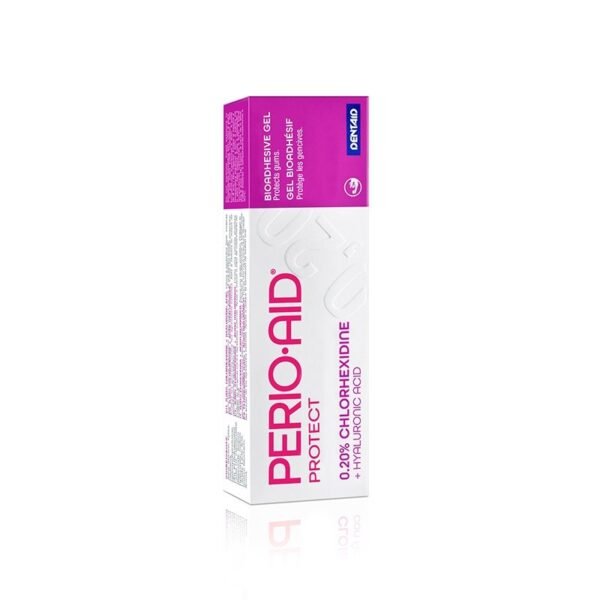





































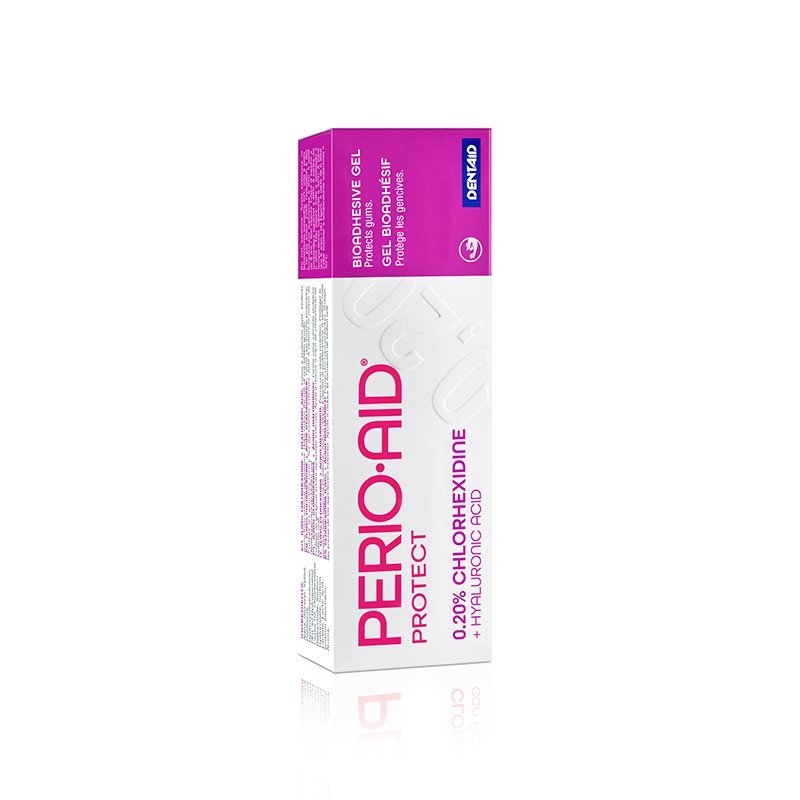
Perio-aid Protect Gel 30ml
PERIO·AID ® Protect est un gel bioadhésif qui contient de la chlorhexidine (0,20%), de l’acide hyaluronique et du panthénol pour une protection renforcée des gencives contre les agressions extérieures.
93.00 DHS
12 en stock
10
People watching this product now!
Description
Les interventions dentaires ont tendance à affecter les gencives et la muqueuse buccale. Après leur réalisation, il est important de maintenir de bonnes conditions bucco-dentaires et d'éviter l'accumulation de biofilm buccal.
PERIO·AID Protect contient de la Chlorhexidine et de l'Acide Hyaluronique qui contribuent à protéger les gencives, en formant un revêtement protecteur sur la gencive et la muqueuse et en produisant un effet bioadhésif. Cet effet barrière empêche la formation de biofilm buccal. Le gel contient également du Panthénol (Provitamine B5), dont les propriétés hydratantes et mouillantes lui permettent de contribuer à prévenir l'inconfort gingival.
Composition :
- 0,20 % de CHLORHEXIDINE
- 0,20% ACIDE HYALURONIQUE
- 5% DE PANTHÉNOL
Indications :
- Gel bioadhésif qui forme une couche protectrice pour un meilleur soin des gencives et de la muqueuse buccale.
- Agit comme adjuvant aux procédures dentaires.
- Aide à réduire le risque de croissance de biofilm buccal dans la cavité buccale.
- Aide à prendre soin des gencives et les protège des agressions extérieures.
Conseils d'utilisation :
Appliquer une quantité de gel de la taille d'un petit pois, en le massant doucement directement sur la gencive ou la muqueuse avec le bout du doigt propre.
Après les soins bucco-dentaires en clinique dentaire, appliquez le gel localement sur la marge gingivale pour réduire la croissance du biofilm buccal.
Utiliser 2 ou 3 fois par jour, après une hygiène bucco-dentaire régulière. Il est recommandé de ne pas ingérer d'aliments ni de boissons dans la demi-heure suivant son application.
NE PAS AVALER. Indiqué pour les adultes et les enfants de plus de 6 ans. Tenir hors de portée des enfants.
Ne pas utiliser en cas de sensibilité à l'un des ingrédients.
Online Sports Nutrition and Natural Dietetics.
Chances are there wasn't collaboration, communication, and checkpoints, there wasn't a process agreed upon or specified with the granularity required. It's content strategy gone awry right from the start. Forswearing the use of Lorem Ipsum wouldn't have helped, won't help now. It's like saying you're a bad designer, use less bold text, don't use italics in every other paragraph. True enough, but that's not all that it takes to get things back on track.
The villagers are out there with a vengeance to get that Frankenstein
You made all the required mock ups for commissioned layout, got all the approvals, built a tested code base or had them built, you decided on a content management system, got a license for it or adapted:
- The toppings you may chose for that TV dinner pizza slice when you forgot to shop for foods, the paint you may slap on your face to impress the new boss is your business.
- But what about your daily bread? Design comps, layouts, wireframes—will your clients accept that you go about things the facile way?
- Authorities in our business will tell in no uncertain terms that Lorem Ipsum is that huge, huge no no to forswear forever.
- Not so fast, I'd say, there are some redeeming factors in favor of greeking text, as its use is merely the symptom of a worse problem to take into consideration.
- Websites in professional use templating systems.
- Commercial publishing platforms and content management systems ensure that you can show different text, different data using the same template.
- When it's about controlling hundreds of articles, product pages for web shops, or user profiles in social networks, all of them potentially with different sizes, formats, rules for differing elements things can break, designs agreed upon can have unintended consequences and look much different than expected.
This is quite a problem to solve, but just doing without greeking text won't fix it. Using test items of real content and data in designs will help, but there's no guarantee that every oddity will be found and corrected. Do you want to be sure? Then a prototype or beta site with real content published from the real CMS is needed—but you’re not going that far until you go through an initial design cycle.